
Track CHAIRS
Track 1: Image Analysis and
Understanding
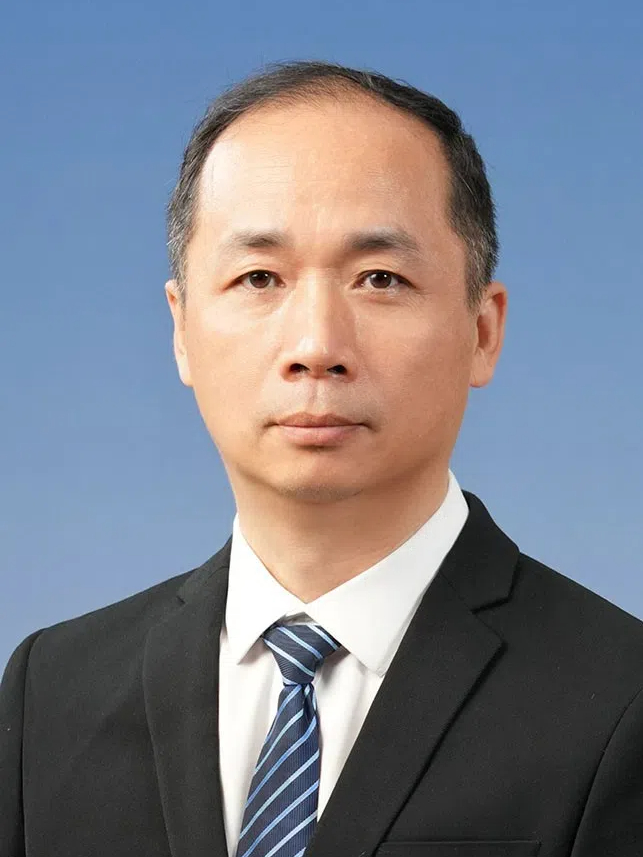
Assoc. Prof. Hong Wu
University of Electronic Science and Technology of China, China
Dr. Hong Wu is an Associate Professor at the School of Computer Science and Engineering, University of Electronic Science and Technology of China. He earned his B.S. degree in Computer Science from the University of Science and Technology of China in 1993, and his Ph.D. in Pattern Recognition and Machine Intelligence from the Institute of Automation, Chinese Academy of Sciences in 2004. From May 2004 to May 2006, Dr. Wu served as an Associate Researcher at NEC Laboratory China. He joined the University of Electronic Science and Technology of China as an Associate Professor in 2006. Dr. Wu's research interests include computer vision, pattern recognition, and applications of large language models (LLMs). He has published more than 40 research papers. Additionally, he has led a General Program research project funded by the National Natural Science Foundation of China and over 10 AI application research projects funded by the industry.

Prof. Zhenfeng Zhu
Beijing Jiaotong University, China
Zhenfeng Zhu is now a full Professor with School of Computer Science and Technology, Beijing Jiaotong University, China. He received the M.E. degree from Harbin Institute of Technology in 2001, and the Ph.D. degree from National Laboratory of Pattern Recognition (NLPR) of Institute of Automation, Chinese Academy of Sciences in 2005, respectively. In 2010,he was a visiting scholar of Biodesign Laboratory, Arizona State University, USA. He was once selected for the Beijing Nova Program and the Ministry of Education’s New Century Excellent Talents Program. He has also won some scientific and technological awards, including the 1st prize of Beijing Science and Technology Award, the 2nd prize of Wu Wenjun Artificial Intelligence Science and Technology Award, and the 2nd prize of Ministry of Education Science and Technology Award. He has been the principal investigator of 20+ research projects, including the Science and Technology Innovation 2030 - 'New Generation Artificial Intelligence' Major Project (sub-project), the National Natural Science Foundation of China, and the Beijing Natural Science Foundation, etc. His current research interests cover computer vision, machine learning, knowledge graph and recommendation systems, and AI for medical health. He has published over 150 peer-reviewed papers, including prestigious journals such as IEEE TPAMI, TKDE, TNNLS, and top conferences such as NeurIPS, CVPR, KDD, AAAI.
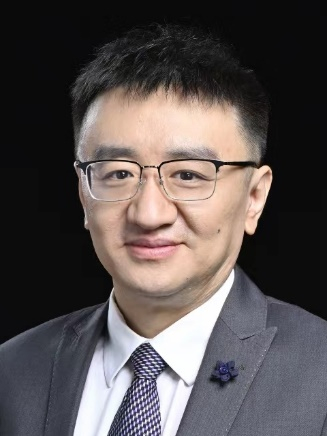
Assoc. Prof. Rui Huang
The Chinese University of Hong Kong, Shenzhen, China
Professor Rui Huang is a
tenured Associate Professor in the School of Science and
Engineering at The Chinese University of Hong Kong,
Shenzhen. He received his B.Sc. degree from Peking
University in 1999, his M.Eng. from the Chinese Academy of
Sciences in 2002, and his Ph.D. from Rutgers University in
2008. From 2008 to 2010, he conducted postdoctoral research
at Rutgers, after which he joined Huazhong University of
Science and Technology as a faculty member in 2010. From
2012 to 2016, he was a researcher at NEC Laboratories China.
His research interests span computer vision, pattern
recognition, and image processing, with recent work focusing
on video analytics, robotic perception and navigation, and
autonomous driving. He has published over 100 papers and has
led or participated in numerous projects supported by the
National Natural Science Foundation of China, the National
Key R&D Program, and the Shenzhen Science and Technology
Program.
His honors include the First Prize for Outstanding Academic
Papers in Natural Science of Hubei Province (2012), the ICME
Best Student Paper Award (2014), the CCF Natural Science
Award Second Prize (2018), and the ICIG Best Paper Award
(2023). He has also supervised student teams that won first
place in the ICDM 2018 Tianchi Global Weather AI Challenge
and the ICCV 2019 Raw to RGB Mapping competition.
Track 2: Image and Video Processing
Asst. Prof. Leiou Wang
Institute of Acoustics, Chinese Academy of Sciences, China
Leiou Wang got the Ph.D. in Signal and Information Processing, University of Chinese Academy of Sciences, China 2015.7 and achieved the Chinese Academy of Sciences, Zhu Li Yuehua Outstanding Doctoral Scholarship, 2015. He devoted himself to signal processing area, especially intelligent signal processing and relative circuits and systems for many years and held multiple projects including National Natural Science Foundation of China and Institute of Acoustics, Chinese Academy of Sciences. He published near 30 academic papers including IEEE Trans. on Aerospace and Electronic Systems, IEEE Trans. on Circuits and Systems, and European Signal Processing Conference (near 30 EI index and 10 SCI index), meanwhile he was granted near 20 national patents. He served as the sub-Session Chair of the IEEE International Conference on Signal Processing 2016 and the Session Chair of the 17th International Conference on Digital Image Processing 2025. Now, he is IEEE Member, IEEE Signal Processing Society Member and Reviewer for Journals including IEEE Transactions on Circuits and Systems, IEEE Transactions on Vehicular Technology. He currently focuses on interdisciplinary research fields between traditional signal processing and intelligent signal processing for underwater areas, such as Hybrid Model Data network, combing the advantages of model-based algorithms and data-driven neural networks.
Track 3: Computer Vision and Graphics

Assoc. Prof. Sinuo Liu
University of Science and Technology Beijing, China
Sinuo Liu is an associate professor at the University of Science and Technology Beijing. Her research field is computer graphics and virtual reality. She is a recipient of the Postdoctoral Innovation Talent Support Program. She is a member of the Computer-Aided Design and Graphics Committee of the China Computer Society and a member of the Smart Healthcare Committee of the China Artificial Intelligence Society. She has published more than 20 papers in related fields, including IEEE VR, SIGGRAPH, CGF, etc.
Track 4: Signal Processing
Assoc. Prof. Chunzhi Li
Huzhou University,
China
Chunzhi Li received the M.Sc. and Ph.D. degrees respectively
in the Department of Computer Science from Wuyi University,
Jiangmen, China and in the Department of Computer Science
and Technology, East China Normal University, Shanghai,
China, in 2007 and 2014.
She is currently an associate professor with the Department
of School of Information Engineering, Huzhou University,
Huzhou City, Zhejiang Province, China, also a visiting
scholar with the College of computer science and technology,
Zhejiang University, Zhejiang Province, China. She has been
a visiting associate professor in 2019-2020 with the
Department of Electrical and Electronic Engineering, the
University of Hong Kong, Hong Kong. Her main research area
is Remote Sensing Image Processing and has published more
than 30 papers on “remote sensing” in the excellent
journals, such as IEEE Trans. Geosci. Remote Sens., Signal
Processing, IEEE Sensors Journal, IEEE Geoscience and Remote
Sensing Letters.
Track 6: Medical and Biological Image Processing
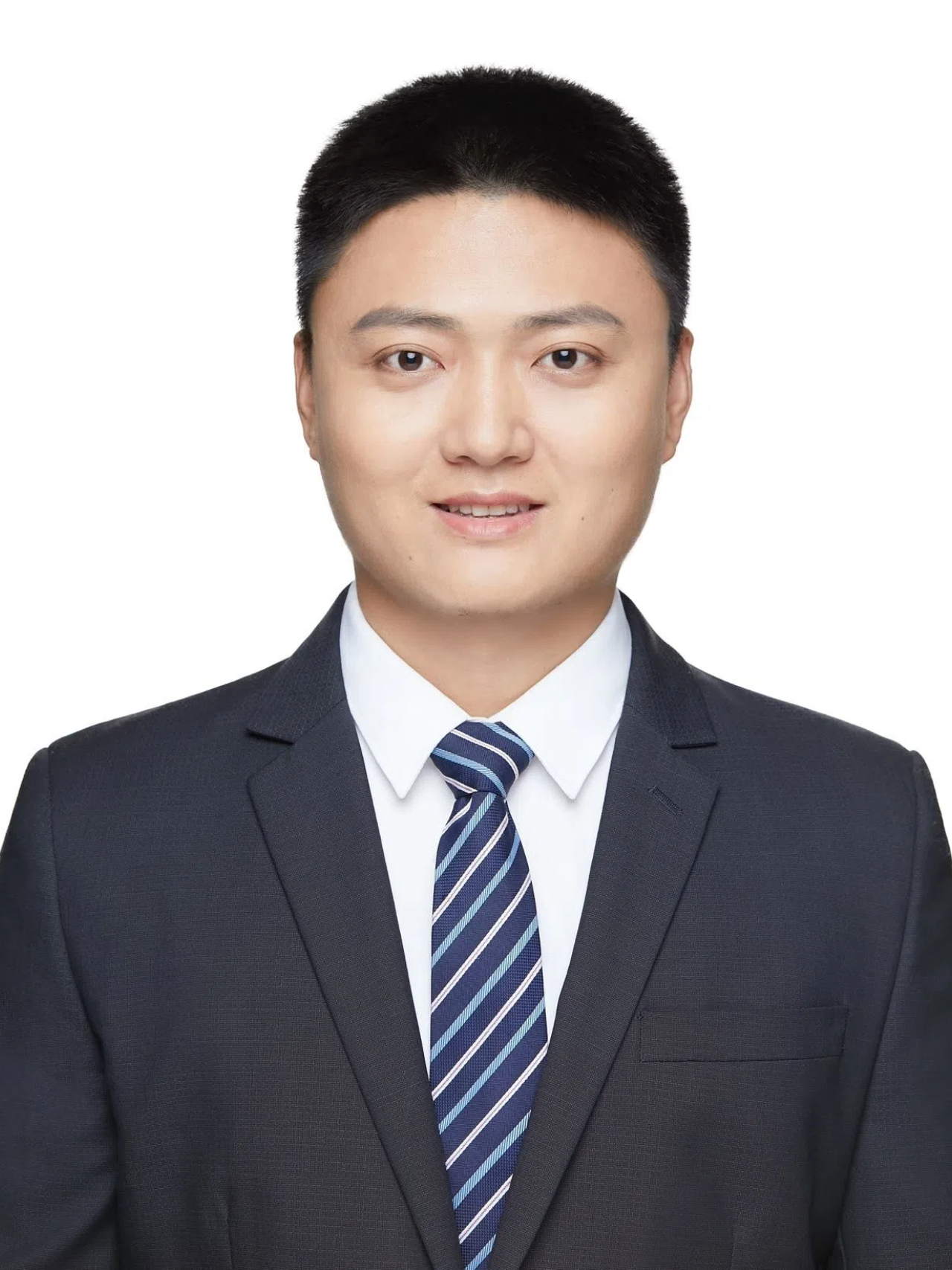
Assoc. Prof. Shuaitong Zhang
Beijing Institute of Technology, China
Shuaitong Zhang is an Associate Researcher in the School of Medical Technology, Beijing Institute of Technology. He completed his Ph.D degree at the Institute of Automation, Chinese Academy of Sciences in 2020 and has dedicated the past decade to supporting treatment decision-making of esophageal cancer and brain tumors through medical image analysis and deep learning. His recent research interests include the analysis of longitudinal medical images, image segmentation and generation. To data, he has authored over twenty academic papers published in journals, such as IEEE JBHI, International Journal of Radiation Oncology*Biology*Physics, npj Precision Oncology, and European Radiology, and conferences including MICCAI2024 and ICDIP2024. His research has been reported by EurekAlert!, a global science news platform by the American Association for the Advancement of Science (AAAS). Furthermore, he also has secured research funding from the National Natural Science Foundation of China, Beijing Natural Science Foundation projects, and has been honored with Yong Elite Scientist Sponsorship Program by the Beijing Association for Science and Technology.

Assoc. Prof. Lizhi Shao
Anhui University, China
Dr. Lizhi Shao is an
Associate Professor and Master’s Supervisor in the
Department of Intelligent Science and Technology at Anhui
University. His research centers on AI-based medical image
analysis and its clinical applications in oncology. He
received his PhD from the Department of Computer Science at
Southeast University (Imaging Lab) and completed a
postdoctoral fellowship at the Institute of Automation,
Chinese Academy of Sciences, where he later served as an
Assistant Researcher at the Key Laboratory of Molecular
Imaging (2022–2024).
He is a selected Youth Talent of both the Chinese Society
for Stereology and Beijing. He leads multiple national
research projects, including NSFC General, NSFC Youth, and
Postdoctoral Foundation projects, and serves as a key member
of several major national grants. As first or corresponding
author, he has published over ten SCI papers in leading
medical and information science venues such as Nature
Cancer, Lancet Digital Health, IEEE TBE, NeurIPS, and CVPR.
His AI method for predicting rectal cancer treatment
response has been included in the CSCO clinical guidelines
for four consecutive years (2021–2024). His AI-based
noninvasive diagnostic method for prostate cancer received
the Second Prize of the Beijing Science and Technology
Progress Award in 2024. He has also contributed to national
expert consensus and standards in AI-assisted cancer
imaging.