
Special Session 14
Special Session 14: Advances in AI-Generated Image Technologies
Description:
Recent advances in generative AI have enabled the creation of highly realistic and creative images and videos with unprecedented quality. Technologies such as diffusion models and multimodal foundation models are transforming content creation across healthcare, education, entertainment, design, and scientific research. At the same time, AI-generated images introduce significant challenges related to authenticity, copyright, misinformation, bias, privacy, and ethical governance.
This special session aims to bring together researchers, practitioners, and industry experts to discuss the latest developments in AI-generated image technologies, evaluation methodologies, responsible deployment, and emerging applications. The session will foster interdisciplinary collaboration and identify future research directions for trustworthy and socially beneficial AI-generated visual content.
Session organizers
Prof. M. Hassaballah, Prince Sattam Bin Abdulaziz University, Saudi Arabia
Prof. Tong Qiao, Hangzhou Dianzi University, China
The topics of interest include, but are not limited to:
• Advances in generative image and video models
• Statistical learning theory for image generation
• Deepfakes and misinformation
• Few-shot and zero-shot image generation
• Detection and verification techniques
• Bias and fairness in image generation
• Privacy-preserving image generation
• Diffusion and generative image models
• Text-to-image/video generation
• Medical and scientific image generation
• Benchmarking and evaluation of generative image/video systems
Submission method
Submit your Full Paper (no less than 8 pages) or your paper abstract-without publication (200-400 words) via
Online Submission System, then choose Special Session 14 (Advances in AI-Generated Image Technologies)
Template Download
Introduction of session organizers
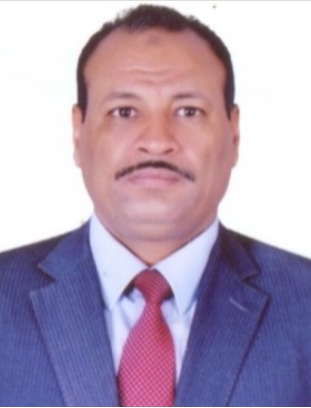
Prof. M. Hassaballah
Prince Sattam Bin Abdulaziz University, Saudi Arabia
M. Hassaballah received the Doctor of Engineering (D.Eng.) in Computer Science from Ehime University, Japan in 2011. He is currently a Professor of Computer Science at the Department of Computer Science, Prince Sattam Bin Abdulaziz University, Saudi Arabia. Also, he is a full Professor at the Department of Computer Science, Qena University, Egypt. He serves as a reviewer for several Journals such as IEEE Transactions on Image Processing, IEEE Transactions on Circuits and Systems for Video Technology, IEEE Transactions on Industrial Informatics, IEEE Transactions on Fuzzy Systems. Also, he is a TPC member of many conferences. He is an Editorial Board member of Pattern Analysis and Applications, Real-Time Image Processing, IET Image Processing, and Imaging Science Journal. His research interests include human-centered artificial intelligence, AI-Generated Content, machine learning, computer vision, biometrics, image processing, feature extraction, object detection/recognition, and data security.
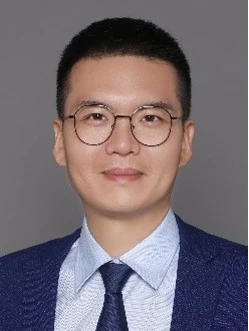
Prof. Tong Qiao
Hangzhou Dianzi University, China
Tong Qiao received the B.S. degree in Electronic and Information Engineering in 2009 from Information Engineering University, Zhengzhou, China, and the M.S. degree in Communication and Information System in 2012 from Shanghai University, Shanghai, China, and the Ph.D. degree in University of Technology of Troyes, Laboratory of Systems Modelling and Dependability, Troyes, France, in 2016. He currently works as Full Professor in School of Cyberspace from Hangzhou Dianzi University. His current research interests focus on media forensics, AI security and data hiding. He has published over 80 peer-reviewed papers on journals and conferences, including IEEE TPAMI, IEEE TIFS, IEEE TDSC, IEEE TMM, IEEE TCDS. He is currently the head of Sino-France Joint Laboratory for Digital Media Forensics of Zhejiang Province, the member of the Technical Committee on Digital Media Forensics and Security of CSIG, the member of the Technical Committee on Big Data and Privacy Computing of CIPS, and an associate editor of IET Image Processing.